


Credit card loyalty schemes have become a key product for banks and credit card companies globally. Being able to offer customers the options of "free" airline frequent flyer points, hotel loyalty points, or even simple cashback rewards for simply using their cards to pay for goods or services has become something that customers love - but this is something that has resulted in competition regulators and central banks globally concerned about high credit card interchange costs and retailers essentially funding these card schemes with the fees they have to pay for accepting credit cards.
Card benefits such as travel insurance and frequent flyer points are funded by the banks using revenue they generate from yearly card fees combined with the revenue from both the interchange and acquirer margin that are earned by the bank each time you use your credit card.
In July 2025 the Commerce Commission announced new regulated interchange rates for Visa and Mastercard transactions in New Zealand that will take effect from the 1st December 2025. These new rates will see the fees retailers pay for accepting Visa and Mastercard drop significantly, and one consequence of this is that it will also see the earn rates for card loyalty schemes drop as well.
Each time you use your credit card to pay for goods or services at a retailer or service provider, a merchant service fee (MSF) is paid by the retailer or service provider to the provider they chose to process their payments. Here in New Zealand transactions that are switched by the EFTPOS network are free, as are debit card transactions where the debit card is inserted into the terminal and you use a PIN. For all credit card transactions when the card is inserted, or used for a contactless transaction, and for debit card contactless transactions, a MSF will be paid by the retailer.
Currently in New Zealand most retailers or service providers will be paying a MSF of somewhere around 1% to 1.5% of the transaction cost depending on the provider they opt to go with, the types of cards they accept, and in some cases the volume of transactions they make. This MSF here in New Zealand is typically made up of four components - an interchange fee, a transaction fee, a scheme fee, and an acquirer fee.
- The interchange fee is paid by the acquiring bank to the issuing bank and will depend on the type of card, whether it is an in person, card not present, or an online transaction. Interchange fees for international cards are also higher than interchange fees for domestic cards. In many countries (including New Zealand) interchange fees are now regulated.
- A scheme fee is paid to the card provider (ie Visa or Mastercard) and will depend on the type of card and the country it was issued in.
- A transaction fee is paid to the network provider or online payment processor who processes the transaction.
- The acquirer margin is the fee that the bank charges. This fee covers their operating cost of providing the card and helps fund customer service, fraud detection and things such as disputed transactions.
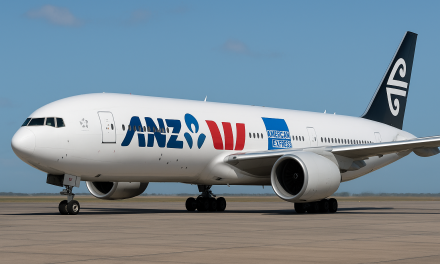
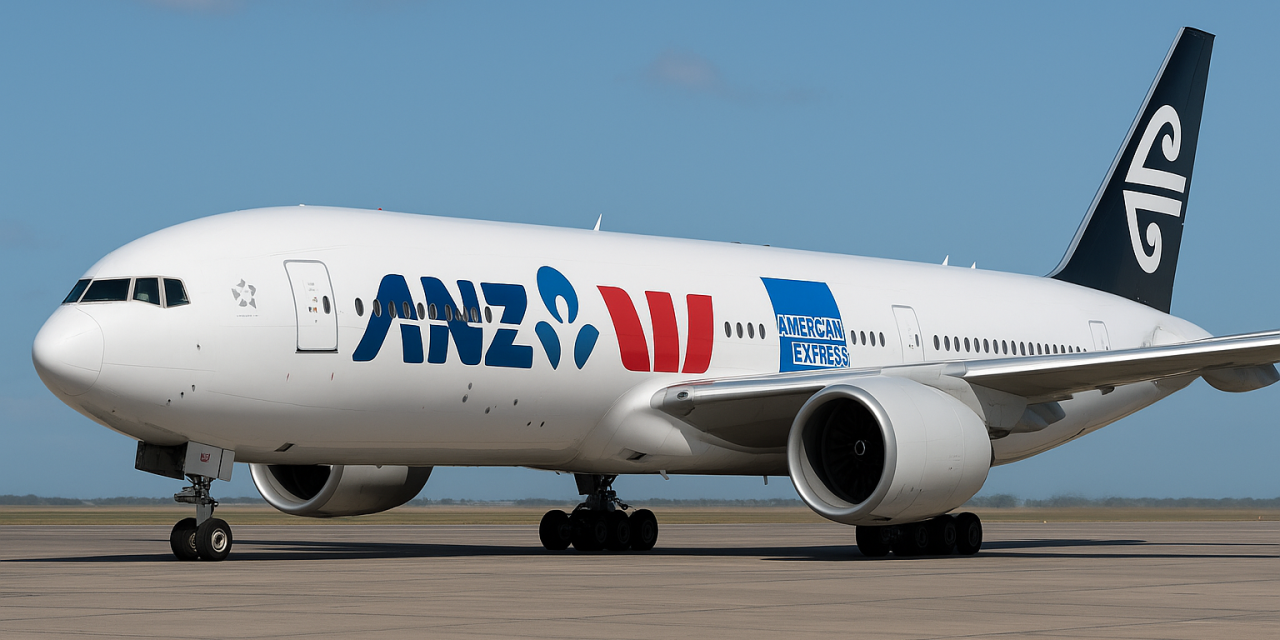
Currently in New Zealand there are four banks who have partnered with Air New Zealand to offer Airpoints rewards for credit card spend. ANZ, Westpac, Kiwibank and American Express. Kiwibank announced earlier in the year that they were ending their partnership with Air New Zealand and will no longer be part of the program from the end of October 2025, with one of their key factors behind the decision being the proposed interchange cuts.
All four offer cards offer the ability to earn Airpoints Dollars on credit card spend. American Express, Kiwibank and Westpac also offer the ability to earn Air New Zealand Status Points on spend.
ANZ do not offer Status Points on spend, and instead offer card holders a 50% bonus Status Point earn on top of all Status Points earned on a qualifying Air New Zealand or partner airline flights - something which is an incredibly good offering.
| Bank / Issuer | Card | Earn Rate (spend per 1 Airpoints Dollar) | Thresholds / Notes |
|---|---|---|---|
| American Express | Airpoints Platinum | $70 | Also earns 1 Status Point per $250 spend |
| ANZ | Airpoints Visa Platinum | $110 | 50% bonus Status Points on qualifying Air NZ flights |
| Westpac | Airpoints Mastercard | $150 | Entry-level card, low annual fee |
| Airpoints Platinum Mastercard | $110 up to $7,000 monthly, then $220 | Tiered earn rate depending on monthly spend | |
| Airpoints World Mastercard | $95 up to $15,000 monthly, then $190 | Higher annual fee, extra perks and benefits | |
| Kiwibank | Airpoints Platinum Visa | $115 | Kiwibank partnership ending 31 Oct 2025 |
From 1st December 2025 new regulated interchange rates set by the Commerce Commission will take effect for Visa and Mastercard. American Express is not affected by these changes as technically there is "no interchange" on American Express transactions as they are both the owner and issuer of all cards, however one would expect they will look to voluntarily reduce the fees they charge retailers to remain competitive in the market.
The following table from the Commerce Commission shows the current interchange rates and new rates.
| Payment method | Current caps/rates | New caps from 1st Dec 2025 |
|---|---|---|
| Domestic cards | ||
| Debit (personal and commercial) – In-person contacted | 0.00% | 0.00% |
| Debit (personal and commercial) – In-person contactless | 0.20% | 0.20% |
| Debit (personal and commercial) – Online | 0.60% | 0.60% |
| Personal credit – In-person | 0.80% | 0.30% |
| Personal credit – Online | 0.80% | 0.70% |
| Commercial credit – In-person | 0.45–2.20%* | Uncapped |
| Commercial credit – Online | 0.45–2.20%* | Uncapped |
| Prepaid – All | 0.20–2.00%* | Uncapped |
| Foreign-issued cards | ||
| Debit (personal, commercial and prepaid) – In-person | 0.60–2.40%* | 0.60% |
| Debit (personal, commercial and prepaid) – Online | 0.90–2.40%* | 1.40% |
| Personal credit – In-person | 1.10–2.40%* | 0.70% |
| Personal credit – Online | 1.10–2.40%* | 1.50% |
| Commercial credit – In-person | 1.85–2.35%* | Uncapped |
| Commercial credit – Online | 1.85–2.35%* | Uncapped |
These cuts will see interchange rates on a regular in-person (ie where a person uses their physical card or phone) Visa or Mastercard transaction cut from 0.80% to 0.30% which represents a 62.5% cut to the revenue that a bank will receive in interchange for every transaction.
Interchange rates for online transactions are still set at a higher level due to a number of reasons, with one being higher fraud levels. To offer zero fraud protection guarantees banks still need to be able to receive income to fund such guarantees.
This change should mean that the fees retailers pay for accepting Visa and Mastercard should drop from the current 1% - 1.5% to a figure well below the 1% level.
Neither ANZ nor Westpac have given any indication yet of what changes might be forthcoming, but these changes will have to occur. The Commerce Commission has estimated that these changes will result in a reduction of around $100 million per year in interchange fees that are paid by retailers, so it's simply not going to be possible for them to keep offering anywhere near the current earn rates once interchange rates are cut. It would not surprise me to see earn rates increase by around 50%.
Changes to raise additional revenue such as increasing annual card fees would likely be very detrimental in such a competitive market, and would still not cover the earn rates for many customers.
The impact of this is also going to be felt by Air New Zealand who have income of several hundred million dollars per year from the "sale" of Airpoints Dollars and Status Points to both banks and retail partners. If banks are not issuing as many Airpoints Dollars and Status Points to their customers the impact of this could be significant, and in their August financial results they disclosed that the financial impact of this change was unknown at this point.
The financial impact to Air New Zealand could easily be in the tens of millions of dollars per year, and it would not surprise me if this is one of the reasons why they have still not rolled out their much talked about refresh of Airpoints tier benefits and launched their expected new high level Airpoints tier that was expected in August.